
Posted On April 8, 2026
Why Container Inspection and Moisture Control Matter
Ocean freight containers travel across multiple climate zones and experience extreme temperature variations. These conditions can cause condensation—commonly known as container rain—leading to mold, corrosion, packaging failure, and cargo damage.
Most moisture‑related claims are not caused by the voyage itself, but by insufficient container inspection and poor loading practices at origin.
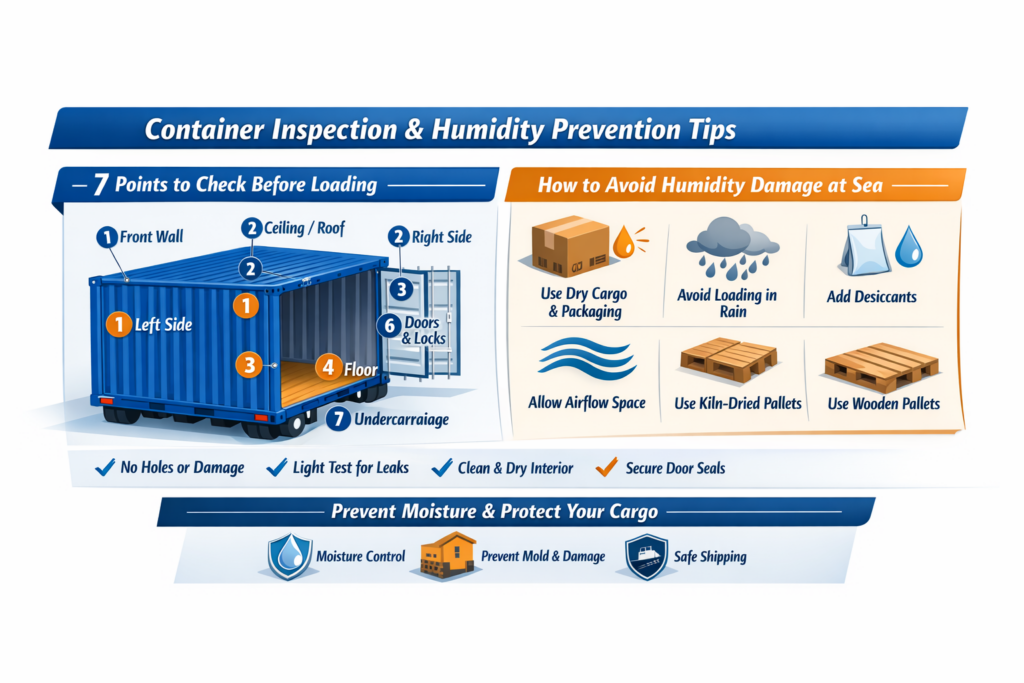
1. Pre‑Loading Container Inspection Checklist
Before any cargo is loaded, the container must be verified as structurally sound, clean, and dry.
Exterior inspection
- Check roof, corner posts, and side panels for holes, cracks, or heavy rust
- Inspect for dents that may compromise structural integrity
Interior inspection
- Perform a light test from inside the closed container to identify leaks
- Ensure the floor is solid, dry, and free of stains or soft spots
- Check walls and ceiling for corrosion or patch repairs
- Confirm there are no residual odors, chemicals, or previous cargo contamination
Doors and seals
- Verify that door gaskets are intact and flexible
- Ensure doors close properly and locking bars function smoothly
Any container failing these checks should be rejected before loading.
2. Understanding Humidity Risks at Sea
Humidity inside containers comes from:
- Moist air trapped during loading
- Cargo and packaging materials releasing moisture
- Wooden pallets and container flooring
- Temperature fluctuations during ocean transit
When warm air cools at sea, moisture condenses on steel surfaces and drips onto cargo—causing damage even in sealed containers.
3. Best Practices to Prevent Humidity Damage
Cargo and packaging preparation
- Load only fully dry cargo and packaging
- Avoid wet cardboard, damp pallets, or freshly treated wood
- Use kiln‑dried pallets whenever possible
Loading practices
- Avoid loading during rain or extreme humidity
- Do not load cargo directly against container walls
- Allow airflow channels between cargo stacks
Moisture control solutions
- Use container desiccants appropriate to transit time and route
- Install desiccants evenly along container walls or hang from lashing points
- Seal the container promptly after loading
Route and transit considerations
- Long voyages and climate changes increase condensation risk
- Sensitive cargo (textiles, electronics, machinery, food products) requires additional protection
4. The Bottom Line
-
Humidity damage in ocean freight is predictable, preventable, and manageable.
A disciplined container inspection process combined with proper moisture‑control measures significantly reduces:
- Cargo claims
- Insurance disputes
- Customer dissatisfaction
- Costly re‑shipments
Partnering with the Right Logistics Partner
Even with the right processes in place, container preparation and moisture control can be complex—especially when shipping across varying climates and long transit routes. Having an experienced logistics partner helps ensure nothing is overlooked.
At Flat World Global Solutions, we work alongside our customers to navigate challenges like container inspection standards, humidity risk mitigation, and proper loading practices. Whether you’re shipping sensitive cargo or simply want to reduce the risk of costly damage, our team is here to provide guidance and support every step of the way.
If you have questions about your current ocean freight processes or want to identify potential risks before your next shipment, reach out to our team—we’re always here to help you move forward with confidence.